

As part of my journalism work, I interview actors, filmmakers, and musicians to steal their ideas for my own artistic pursuits.
Take a look!
_____________________________________________________________________________
Feeding A Hungry Fad: A Pithy Chat with “Hunger Games” Star Liam Hemsworth
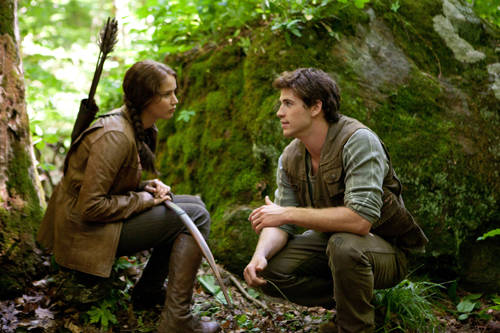
- Photo Credit: Lionsgate Films
Originally Published in The Daily Free Press on March 21, 2012
Fads are as intrinsic to adolescence as acne. Unbridled imagination, desires for escapism and romance and unchecked spending provide the perfect formula to recruit disciples to the gospel of vogue.
Adults, who often forget their own teenage pasts, have always found fads vacuous. And while the hormonally fueled hype of The Beatles proved deserving in the vibrancy of their resulting catalogue, fears have arisen over the 21st century teenage affinity for vampires, transformers and dispassionate acting.
Liam Hemsworth, 22, irrevocably trapped in teenager-dom by his steady relationship with Miley Cyrus, feels otherwise. Hemsworth stars as Gale in the adaptation of the latest teenage obsession,The Hunger Games, whose premiere on Friday is scheduled to incite mania.
For the few isolated from the frenzy: The Hunger Games is part one of fantastical trilogy written by Suzanne Collins set in Panem, a prediction of the dystopian future of North America. In Panem, the totalitarian Capital holds an annual competition, the Hunger Games, for which 24 tributes, aged 12-18, fight to the death in televised carnage that all humans are forced to watch.
While a man of few words in our recent interview, Hemsworth appears armed to combat critics salivating to brand The Hunger Games as the same cinematic failure that mars the Twilight series. Hemsworth called The Hunger Games one of the “most powerful films [he’s] seen . . . ever.”
Q: The Hunger Games is filled with some really heavy material, but it still appeals to younger audiences. How does the film walk this line and how did you achieve that duality on set?
LH: The thing about the books and the movie, and the movie is very similar to the books, [is that] violence in it is not glorified in any way. These children are caught in a horrible situation…they don’t want to kill. The people in these districts don’t want to watch, it’s not entertainment for them, they have family and friends in it that are probably not going to come home. It’s not glorified in any way.
Q: Do you connect with the relationship between Gale and Katniss?
LH: For Gale and Katniss, it’s not really a romantic thing at this stage. They’ve grown up together, they’re best friends. [Gale is] watching his best friend go into battle and probably not come back. There’s not a real romance there yet, I don’t think either of them think it’s romantic. And then of course, there’s Peeta and Katniss, which . . . I think she’s a little confused [about]. She was just playing the game and it bothered her that she may actually feel something for him. So it’s a little bit confusing at this point – and it develops over the story and it gets more confusing – but it’s not the central theme behind the books.
Q: How does your role in The Hunger Games differ from roles you’ve played in the past?
LH: Every one of my roles is very different. I think, as an actor, I always show something of myself in my role because they’re the kind of emotions you draw on for different characters. But for Gale, he’s a very strong character and he’s caught in a whole situation and he’s kind of an extraordinary young person. He, like Katniss, is providing for a whole family and you know, he’s really powerless to do anything at this point. But what I love about him is that he does stay true to himself through the books and he does want to fight back and he doesn’t want to part of the Games anyway which is why he refuses to watch.
Q: Did you draw on material like the film Battle Royale when you were performing in The Hunger Games?
LH: I’ve actually never seen Battle Royale. I tried to cue to pretty much in on this book and this script.
Q: How are you feeling about the pressure to live up to the expectations of the readers of this series?
LH: It’s nerve-racking and exciting at the same time. Going into it, it was already big at that time, but it was nowhere near as big as it is now and it seems to keep growing more and more. And I’m very proud of the film. I saw it for the first time last week and it’s one of the most powerful films I’ve seen ever and at the same time, there is pressure, but I am very proud of it and I think audiences will really enjoy it.
_____________________________________________________________________________
Ezra Miller’s “endless source of horribleness” in We Need to Talk About Kevin

- Photo Credit: BBC Films
Originally Published in The Daily Free Press on March 13, 2012
Ezra Miller is a complicated, brooding teenager, but one who ruminates far outside the perimeter of the ordinary pubescence.
Miller, 19, is the eponymous star of We Need to Talk About Kevin, a chilling introspective on the evolution of sociopathic mania in seemingly normal life. Miller’s portrayal of the sadistic Kevin, whose entire adolescence is a practice to antagonize his mother Eva, (Tilda Swinton) is a mature character study. Yet, during our recent interview, Miller dissected Kevin into rational themes. He empathized with Kevin as being one in the category of “those we don’t understand.” He defended Kevin’s “longing” and “yearning.” And it was a bit frightening…
“The second that I read the script, I really wanted it very badly,” explains Miller. It was a long audition process of six auditions – and a year of quiet after the financial crisis – before Miller was confirmed for the role. “I was constantly pestering my agent about where [the role] went. I feel very lucky that…my persistence survived the auditioning process for a film that I wanted so badly, it almost drove me to madness.”
Miller’s obsession to grow close to Kevin came in the “challenge of someone who was simultaneously hard to understand and very understandable,” a mission that mirrors mother Eva’s same attempts in the film. Throughout the film, Kevin terrorizes his family, each act growing in brutality as he grows older. Some of his acts are near unbearable to witness onscreen, an experience perhaps made more harrowing by filmmaker Lynne Ramsay’s implication, rather than visual exhibition, of much of his savagery.
Kevin’s ruthlessness not only distresses the audience, but emotionally exhausted Miller too. “Draining is the word… caught up in the emotional state of the character. It’s amazing to discover your own endless resource of horribleness. It renews itself …it’s not even intentional…”
Despite Kevin’s cruelty, Miller doesn’t perceive – and doesn’t play – Kevin as psychotic. “When I initially read the script, [I saw] sociopathic behavior is written all over. The more I considered it…the more I came to think that he is not a sociopath, he is someone who, over the course of his life, responds to circumstance,” explained Miller.
Responds to circumstance. This is the same justification often bestowed to defend juvenile criminals of horrendous crimes. And while Miller certainly doesn’t condone Kevin’s havoc, when prompted, he admits that he “connects” with Kevin.
“What was intriguing was that [Kevin] is this person who has basic deprivations in [his] early life, is hyper aware, and then is someone who, from a young age, found [his] own tools, in terms of exposing and bringing to the surface, the harsher realities of this situation. And then, [Kevin is] someone for whom those tools became more comfortable and perhaps the only available mode of operation.”
Miller’s empathy for and apparent connection with Kevin do invite questions into the darkness of their shared penumbra. Yet, Miller’s fraternity with Kevin does result in artistic mastery. Miller’s sympathy for Kevin warps into a performance so palpable that audiences themselves contort their seated bodies at their anticipated, rather than visual, horror. Miller can furnish this unrelenting anxiety, even with small, meticulous ticks of disturbia, because he renders Kevin, so relentlessly and unforgivingly, human.
We Need to Talk About Kevin released in Boston on March 9, 2012.
_____________________________________________________________________________
“All we have to do is decide what to do with the time that is given to us”: The Profundity of Viggo Mortensen

- Photo Credit: Sam Coyle, The Daily Free Press
- Originally published in The Daily Free Press on March 8, 2012

Buried below Bag End, far deeper than the caverns of Moria, and further beyond the reach of Ent roots, J.R.R. Tolkien sowed the story of human nature in The Lord of the Rings. Centered on a ring that can rule humanity, Tolkien questioned what it means to be human, an examination only answerable through the grit and contemplation inherent in a journey.
While a superlatively versatile actor, Viggo Mortensen is best known as for his portrayal in The Lord of the Rings films as Aragorn, the rugged wilderness ranger who realizes his birthright to become King. Despite the acclaim Mortensen received for his portrait of Aragorn, further examination reveals that Mortensen is, in fact, a 21st century reincarnation of Tolkien himself.
On Monday, Viggo Mortensen stood, somewhat nervously, in Brookline to collect the ninth annual Coolidge Award, an honor that has in previous years gone to Meryl Streep and Thelma Schoonmaker for contributions to film. At the Coolidge press conference, Mortensen appeared charismatic but enigmatic, a clear reflection of the stern commitment to authenticity and humility that garnered him the award. At the same time, however, Mortensen’s high cheekbones shadowed twenty years off of his age and gleamed with Tolkien’s same childish voracity to absorb and preserve the richness of humanity.
With a childhood of residences in Argentina, New York and Denmark, Mortensen cultured an early optimism for global solidarity, a virtue evident in his ability to converse in seven languages. Mortensen’s tactile tongue has proved useful in multilingual roles and added extra dexterity to enunciate the unique syllables of Middle Earth. Tolkien created numerous languages for Elves, Dwarves and Orcs, richness that Mortensen swallowed with skill. Even with this obvious parallel of etymological prowess with Tolkien, also evident in Mortensen’s poetry pursuits is, in fact, imagination that unites the author and student.
Undiminished by the magnified glow of his projected name on the Coolidge stage on Monday, Mortensen compared his imaginative approach to acting to sandbox ingenuity of children. Legendary in Hollywood for his meticulous role preparation, Mortensen explained that his research always encompasses “from birth to page one,” the history of the character that precludes the script.
“You’ve got to make it up,” he said. “And I like to. It’s a very childish activity. For me to feel comfortable, I really have to believe it as much as I did when I was a little kid, pretending to be a Viking or an athlete.”
Mortensen’s humble admissions that he “prepares thoroughly” understate his devotion to culturing his imagination. To best mirror Sigmund Freud in his most recent film, A Dangerous Method, Mortensen read rare editions of books that had once adorned Freud’s own library. To understand the intrepidity of Russian mobsters for Eastern Promises, Mortensen spent weeks with Slavic gang members. To best capture the complexity of Tolkien’s ranger and king, Aragorn, Mortensen hiked solo through the wilderness of New Zealand.
“It’s my way of paying attention and communicating with the world I’m in,” said Mortensen.
Tolkien would be just as humble; the author spent decades coloring Middle Earth with volumes of history to preclude the Lord of the Rings trilogy, a feat Mortensen has always admired.
Above all, however, Mortensen echoes Tolkien loudest in their shared dedication to stories about human nature. Declaring his own love for fantasy, Mortensen explained that the enduring popularity of the Lord of the Rings trilogy and films comes in its profundity.
“There was compassion . . . there was something profound in all of these different races coming together, working together.” he said. “The stories are something that’s going to last.”
Mortensen too strives to make stories that will last.
“I never really had a career plan,” he said. “I just like stories and I think the stories that we tell about ourselves are who we are. It’s how we deal with the puzzling fact that we’re here. We’ll never know really why we’re here no matter what’s written down or what one wise person tells or some holy person tells you. You’re never going to know why we are but it’s worth [it] . . . it’s interesting . . . it’s fun . . . trying to find out.”
_____________________________________________________________________________
Taking the Plunge: An Interview with Elizabeth Banks

- Originally Published in The Daily Free Press on January 26, 2012
“Time is always your friend in a negotiation,” stresses Elizabeth Banks, Hollywood darling and NYPD negotiator in the upcoming Man on a Ledge, a thriller that explores the psychological warfare needed to prevent suicide jumps. “The longer a negotiation gets drawn out, the morer likely it is that the person will come inside or that you’re going to be able to physically exhaust them and take them down.”
Banks certainly knows how time can weigh on the will to make a daring leap. At an enviously questionable 37, Banks has contended with a decade of formulaic supporting roles. Yet, in that same decade, innumerable actors and actresses have succumbed to time, “coming inside” from inhospitable and unforgivable stratosphere of show business, surrendering to physical exhaustion.
Banks’ plunge of perseverance has proved fruitful. Triumphantly securing her place as both as a film and television superstar, she has also proved her acting range in a spectrum of leading roles such as in W., The Next Three Days, and 30 Rock. In Man on a Ledge, Banks reflects this liberation in playing, for the first time, an independent woman: “working class” NYPD detective Lydia Mercer who is called to coax the suicidal Nick Cassidy (Sam Worthington) off of a ledge of Manhattan’s Roosevelt Hotel.
“I really liked the idea of not playing someone’s wife or girlfriend,” Banks explains during our conversation at Boston’s Liberty Hotel last Friday, referring to the myriad of arm candy she’s played in films such as The 40-Year-Old Virgin and Definitely, Maybe. While Banks’ Lydia Mercer in Man on a Ledge “parties hard” and is hardened by the misogyny and emotionally tumultuous nature of her profession, Banks wanted to create a character who was “a woman…very feminine…because I think [being tough] is just clichéd.”
Banks’ consideration to explore the dynamic depth of her character is indication of Banks’ dramatic depth too. To this same end, Banks extensively researched the nuances of suicide negotiation, conversing with real-life NYPD negotiators to hear their “amazing stories” and various industry strategies.
“‘Jumpers always jump,’ that’s [negotiators’] motto. If you want to off yourself, you go to the top of the building and you jump off,” Banks said. “If [negotiators] actually get into a situation where they’re talking to someone, they have a pretty high success rate. So, little moments like that are built into the movie because of research. When [my character] first walks into the room, [I know that Sam Worthington] is not particularly suicidal, because if he was, he already would’ve jumped…and so I take my time going to the window, I ask questions…there is no rush.”
Banks’ devotion to authenticity was likely influenced by Man on a Ledge’s commitment to realism (yes, they actually filmed on a ledge of the Roosevelt Hotel). Yet, her decade of supporting masters like the “super committed” Ed Harris in Man on a Ledge, comedy heroes Seth Rogen and Paul Rudd in several films, and the “so pro” Alec Baldwin on 30 Rock, have fine tuned Banks’ observation skills, vital to an actress, and clearly paid dividends, exemplified in Banks’ 2011 Golden Globe nomination for 30 Rock.
It’s no wonder that Banks’ intrigue in her Man on a Ledge character, Lydia Mercer, came in “her curiosity and her hunger to figure out what’s going on, her need to know the truth of the situation.” Elizabeth Banks herself has proved, now that she’s on top of, or on a ledge, so to speak – of that same insatiable desire to absorb all that the Hollywood stratospheric spectrum offers. And if her upcoming role as the “Marie Antoinette meets Kabuki” Effie in The Hunger Games is any indication, Banks’ panoramic catalogue will only continue to diversify.
It is said that time slows when one plunges from the skies. If only to see the trajectory of Elizabeth Banks, let’s hope time creeps by.
Man on a Ledge opens tomorrow, January 27, 2012.
_____________________________________________________________________________
The Ever Elusive Monroe: A Conversation with “My Week with Marilyn”’s Simon Curtis
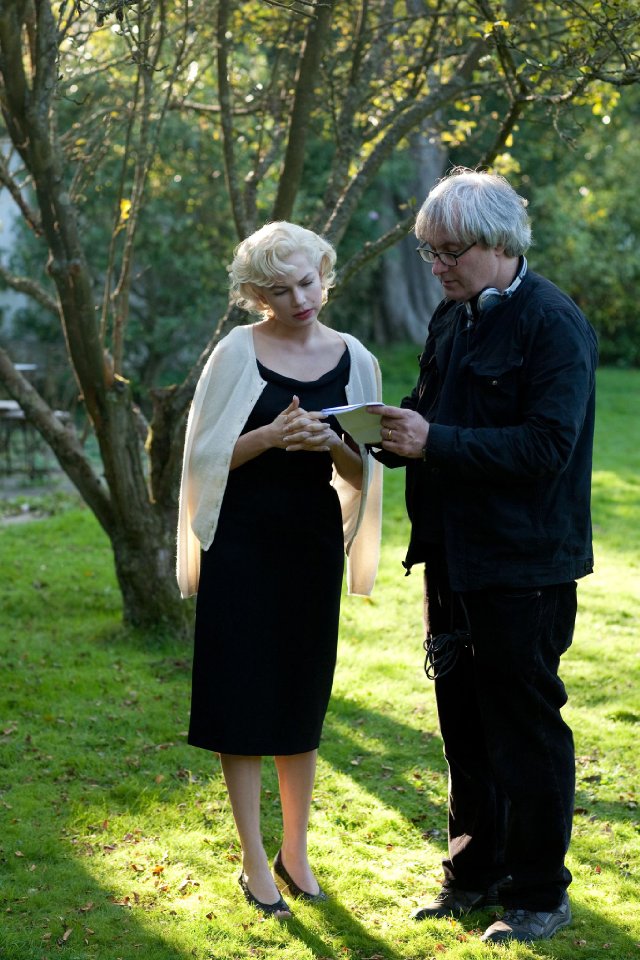
Originally Published in The Daily Free Press on November 30, 2011
While the fairy tale of the Royal Family, shaking moptops and suave accents have always weakened American knees to curtsey before Union Jack, it is Hollywood that twinkles through the London fog to endear the Earl Greys to America.
In his first major motion picture, My Week With Marilyn, Director Simon Curtis encapsulates the joy and conflict within this symbiotic relationship, exemplified when Marilyn Monroe first visited London to film The Prince & The Showgirl with Laurence Olivier in 1956.
Based on two memoirs by Colin Clark, the third Assistant Director on the 1956 film who not only befriended, but fell in love with Monroe, My Week with Marilyn illuminates how small-town Norma Jeane struggled to live up to Olivier’s demands and the world’s expectations for Marilyn Monroe.
I recently sat down with Simon Curtis, an Englishman who, nearly fifty years after her death, is still in love with Marilyn Monroe. Yet, Curtis understands why Monroe (a convincing Michelle Williams) felt so alienated in his country and sought friendship in the young Colin Clark, portrayed by Eddie Redmayne in the film.
“England was rather a dark, dour place then, a country still recovering from the Second World War. And American glamour sort of arrived…and it was a massive event,” explains Curtis.
While the mass mania this divide caused distressed Monroe, the acting styles of Oliviers’ United Kingdom and the Monroe’s America also conflicted, resulting in temper tantrums from the Shakespearean actor (portrayed by a fantastic Kenneth Branagh) and prima donna behavior from Monroe.
“There was much more contrast between English arts and American arts then. Now, there’s scarcely an American TV show or film without an British leading actor and Americans comes to England to play Jane Austen.”
“But back then, there was a distinction between the British theatre way of acting, between the funny walks and moustaches and noses that Olivier represented, and the more psychological, Stanislavski-influenced, method school of acting out of America [that Marilyn was working on] and this film epitomizes that clash in a way.”
Channeling the method art of Stanislavski himself, Curtis painstakingly recreated the details of Monroe’s stay in London to personify her strife. For moments back dropped by the filming of The Prince & The Showgirl, Curtis filmed on the same Pinewood stage that Monroe and Olivier used. To capture Monroe’s sensitivity at its rawest, Curtis filmed in the same country home, Parkside House, where Monroe resided during filming.
“I have been developing this film for about eight years, but there were all kinds of extraordinary moments. Michelle did Marilyn’s Prince & The Showgirl dance on the same soundstage where Marilyn had actually done that dance.”
It should also be noted that Curtis, along with the brilliant cinematographer Ben Smithard, recreated the colors of Monroe’s world beautifully. Screens of Technicolor often light the scenes, bringing audiences even closer to 1956.
Yet, despite the effort needed for such replica, Curtis explains that, in fact, Marilyn was most challenging to reconstruct.
“What was most difficult to recreate was the fact that there were three Marilyns. There was the Marilyn as Elsie in The Prince & The Showgirl, there was the public Marilyn and then there’s the private Marilyn…and there were tasks to recreate each of them.”
Despite the strife that Monroe experienced in London, My Week with Marilyn portrays Monroe’s stress and vices as vulnerabilities, rather than dark sides, demonstrating Curtis’ – and Colin Clark’s – affection for Monroe.
“We weren’t necessarily trying to “repair” Marilyn’s image, but we had uncovered an interesting new truth about Marilyn and we wanted to give her the benefit of the doubt. I have a lot of sympathy with Marilyn. She had a very tough upbringing and I have a lot of sympathy with a woman trying to do her best in difficult circumstances.”
Along with Curtis, the rest of the world, both in 1956, and now, remain captivated by Monroe.
“I think she was a prototype celebrity both for her performances and for her life. We take that for granted now, we read about Brad and Angelina all the time. “
“But she was ahead of her time, whether it was deliberate or not, there was always a marriage or an affair or a photo call as well as the acting [to attract a crowd]. I think that she somehow instinctively knew how to be talked about.”
And while no one, not the British nor the Americans nor Colin Clark nor Simon Curtis will ever know the true Monroe, which portions were Norma Jeane and which were Marilyn, nor how much she suffered by Olivier and was exalted by Colin Cark during The Prince & The Showgirl, Curtis hopes that he came close.
“I hope she would think that we did her justice. I hope she would think “that’s the real me, that’s what I’m like.”
Yet, despite all that is revealed in My Week with Marilyn, Monroe’s mystique will continue to swirl through London Fog and Hollywood smog, evading and enchanting us for years to come.
_____________________________________________________________________________
In Memory of America: A Conversation with the Allman Brothers Band’s Butch Trucks
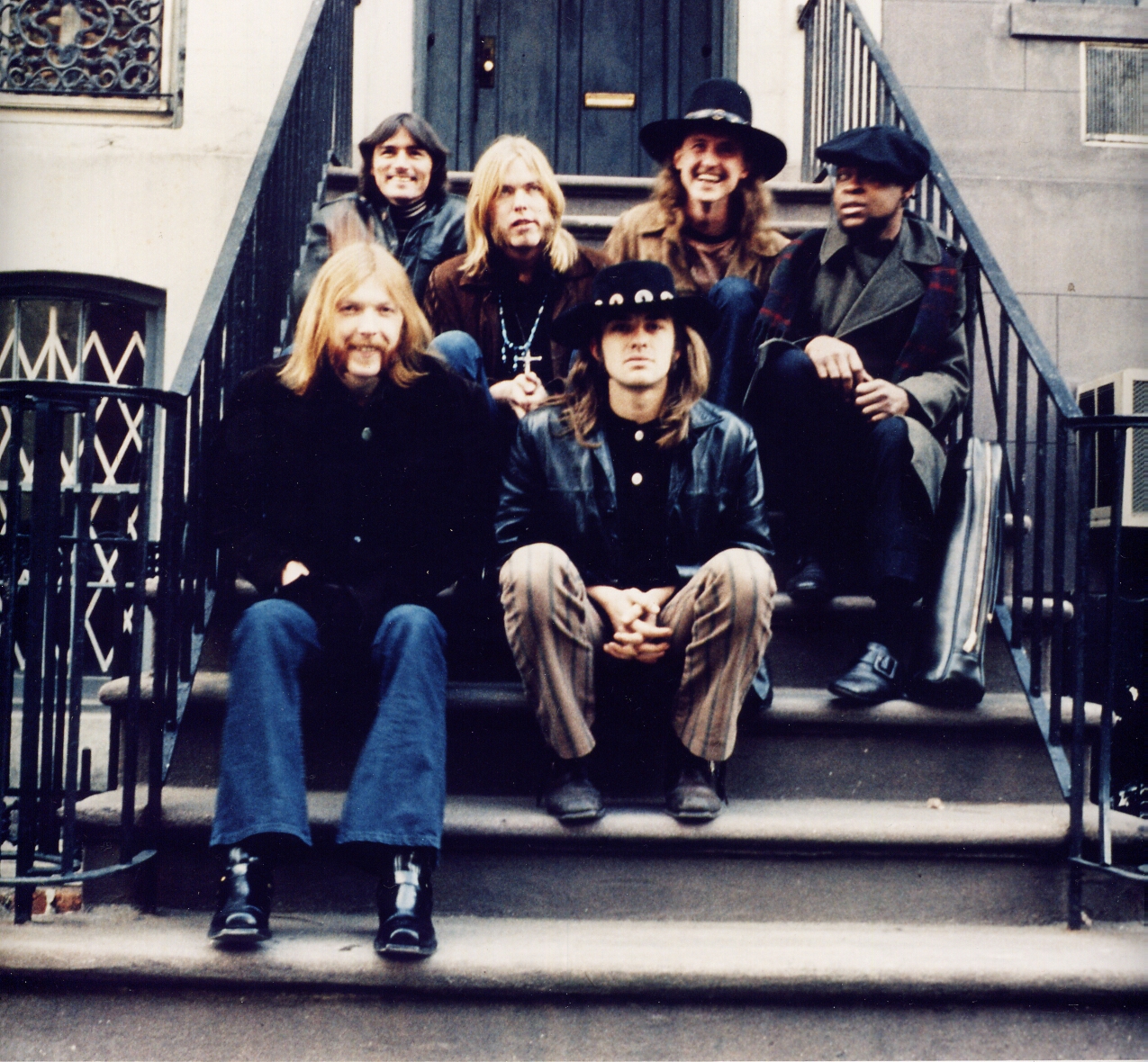
Originally Published in The Daily Free Press on November 21, 2011
In the latter half of the 19th century, railroad travel revolutionized the psyche of the American people. Culture and philosophy from the South could now permeate the North, and vice-versa, delivering national solidarity and fraternity that railways today still provide.
In the same way, Butch Trucks, christened “The Freight Train” as founding member and drummer for the Allman Brothers Band, incalculably impacted the American people in the latter half of the 20th century. In their over forty years together, the ABB traversed and transformed the American frontier, sweating Southern blues into American soil to fertilize and romanticize nostalgia for simpler times.
I recently spoke to “Freight Train” Trucks in preparation for the Allman Brothers Band’s four-night engagement at Boston’s Orpheum Theatre at the end of November through early December. At 64, Trucks doesn’t play three hundred shows a year like he used to, but still remains ferociously attached to the America of blue sky, mountain jams, and midnight riders of yesteryear.
“What the fuck is wrong with this country?”
This was the tenor that dominated most of our conversation, despite my novice attempts to bring the conversation back to music.
“Right now, we have about 400 families that own this country lock, stock, and barrel, the 99% are getting really screwed by the 1%… what the hell do you do about it? I mean, the best we can do is try some kind of Revolution.”
Proclamations for plebian uprising are fascinating when issued from a man with ten gold records, a Grammy, and membership in the Rock & Roll Hall of Fame. Still, Trucks champions Occupy Wall St. and suggests that the U.S needs to return to its agrarian roots to minimize wealth stratification in the country. How Jean-Jacques Rousseau of Trucks.
Yet, on second thought, Trucks’ obsession with a return to quintessential Americana isn’t all that surprising. For nearly a decade, the ABB were based in Macon, Georgia where the heartland – and music – are quilted into the culture’s fabric.
“We were out playing music just for the sake of playing music,” Trucks explains. “We hated all that damn picture taking. And interviewing, doing the kind of thing that I’m doing right now!” he jokingly chastises.
Trucks’ explanations evoke the ABB’s spiritual connection to music, as if the contributions of the individual band members are superseded by their performance as a whole because it can transcendentally unite the listeners, the frontier, the Native American spirits that still possess their Georgia homeland.
“We played 300 shows a year and if we didn’t have a gig booked, we’d just find a park and set up to play for free. Music was the most important thing.”
Yet, as the ABB reaped the fame they had toiled so long to harvest, their symbiotic relationship with music and fraternity within the heartland was soon severed.
“Celebrity is the worse thing that ever happened to the Allman Brothers. Before Duane died, we were a very, very, close-knit family,” explains Trucks, emphasizing the unifying role Duane Allman, considered one of the, if not the, best guitarists of all time. “We partied, but if partying was getting in the way of music, then you had to deal with Duane. “
But after Allman’s death in 1971, Trucks explains that the ABB “got away from that, even got away from the music.” The ABB’s emphasis on explicating the intricacies of blues grizzled into “country-fried hit records,” which simultaneously garnered nationwide fame and alcohol, drugs, and egos that “ripped [them] all apart.” Upon their breakup in 1976, a devastated Trucks returned to the heartland to raise a family and return to school.
Nowadays, however, The Freight Train explains that the mature and sobered Allman Brothers Band is “doing it right.” As the ABB haven’t played since earlier this year, Trucks explains that he’s “jonesin” to play drums again, a term he delights in defining for a naïve reporter. He has the insatiable thirst of an addict; he must play.
“We start locking in, the juices start flowing. There’s no tomorrow, there’s no yesterday, you’re there in the moment, there’s no pain, and even though you’re playing three-hour sets, you’re not tired, you’ve got all this energy. When I get up to play music now, that’s my drug.” The Allman Brothers Band has returned to roots.
As for Trucks, The Freight Train is actually relocating to France. While initially uncharacteristic for a man so indelibly intertwined in the American fabric, deeper examination reveals that this move is not a betrayal, but rather an embrace of Trucks’ past. Revealed in his orations on the “fall of the American Empire,” Trucks longs for the amber waves of grain and brotherhood the ABB found as they manifested their own destinies across the American frontier. He longs for a simpler time that is, for now, lost.
That said, it’s clear that The Freight Train will keep chugging from sea to shining sea until he can find that time again. Keep on jonesin’. Keep on Truckin’.
The Allman Brothers Band plays Boston’s Orpheum Theatre on November 29th and 30th as well as on December 2nd and 3rd.
_____________________________________________________________________________
“Pickin’ Up the Pieces” of Soul: A Chat with “Fitz & the Tantrums”‘ Jeremy Ruzumna

Originally Published in The Daily Free Press on November 9, 2011
By its very definition, soul music cradles our most intimate emotions. Catchy melodies wind their way into our deepest crevices, exalting and exciting us, often into dance. Yet, in a culture dominated by prerecorded loops and computer-generated accents, it’s difficult to find the hedonistic passion inherent to soul on the radio or on stage.
Thankfully, Fitz & the Tantrums, a Rolling Stone 2011 “Band to Watch,” brings it on home. Comprised of organ, bass, brass and drums, the band of gold is now notorious for the jungle boogie energy and heat wave of sweat they sustain to the stage ’til the midnight hour.
Yet, despite their Motown influence, Fitz & the Tantrums is no knockoff band. Modernity complements both band sound and ideology, leading to musical innovation that will be on show Friday night as the Tantrums storm Boston’s House of Blues.
I recently spoke with Jeremy Ruzumna, Boston native, and keyboardist for the band on their climb to fame and mission to reawaken soul.
Michela Smith: Soul, R&B, Motown, your inspirations, are all uniquely American creations. How does your music translate when brought abroad?
Jeremy Ruzumna: Everywhere in the world, people respond to soul music. It just seems universal. Even before Fitz and the Tantrums, everyone in this band had traveled the world in other bands that were heavy on soul, r&b- whatever you want to call it- and people worldwide just love it.
MS: Many tracks on Pickin’ Up the Pieces either express remorse or anger over love. Is it emotionally difficult to perform these songs nightly or can the band remove themselves from the emotional content to ensure that everyone still has a good time?
JR: Well I can’t speak for Fitz, but I’d say that when it comes time to perform, it’s really more about getting the adrenaline pumping and focusing on pulling the audience into a crazy, hyped up party. And even though a lot of the lyrics are sad or remorseful or angry, performing the songs live is really a blast for us. Maybe it’s a way of turning the universal pain that love can bring into something fun and awesome.
MS: A vintage church organ bought by Fitz started this whole adventure. Unsurprisingly, Pickin’ Up the Pieces heavily features organ parts too. Do you think you’ll always feature organ in your music, even as your music evolves, simply because it’s so integral to the band’s existence?
JR: Organ, and keyboards in general, will always be an integral part of our sound. We don’t even have a guitar player, so keyboards are the only chordal instrument in the band! We plan to push the sound forward on the next album in a lot of ways, and one way we’ll do that is by continuing to use old, interesting vintage keyboards. Between Fitz and myself, you could fill a warehouse with crazy vintage keyboards.
MS: How did Fitz balance writing, playing, and engineering when putting together Pickin’ Up the Pieces?
JR: Fitz is a very seat-of-your-pants type producer, which is to his benefit. It can be hard when you have to be the guy responsible for making everything sound good – which is kind of like being the teacher in the class – and simultaneously putting yourself in the zone of being childlike and creative. But Fitz has the natural ability to keep things moving forward by not over-analyzing things in the moment. He understands that modern recording allows you to capture performances and moments and vibes, which can then later be sorted through and molded into a final product. The trick is to know what to stress about and what not to sweat.
MS: The group formed in 2008, Pickin’ Up the Pieces released in August 2010, but Rolling Stone didn’t call you a “band to watch” until April 2011. What was that waiting period like, between breakout and serious success?
JR: There is a lot of faith and a lot of uncertainty for anyone who is trying to make it in music. You literally sacrifice years of your time, making no money, working your tail off, not being around to hang out with your friends and loved ones, and slaving away with zero guarantee that anything is even going to pan out. That’s the truth. And you know the whole time that no matter how good you are, the odds are stacked against your ever making it. It’s kind of insane to be a musician, yet we do it because we love it and we are crazy enough to still have a dream, even as the music business crumbles around us.
MS: I heard that you were serendipitously booked on Maroon 5’s tour after Adam Levine’s tattoo artist recommended you. Is the music industry dependent on talent, “being in the right place at the right time,” “who you know” or a mixture of all three?
JR: Definitely a mixture. ”Luck” is a deep concept, because it’s made up of many things. It’s lucky that Adam Levine dug us enough to ask us out, but we also had prepared ourselves as a band and as musicians to be able to act on the chances that came our way. You really do make your own luck, and you have to recognize opportunities when they arise. In the beginning, we said yes to everything that came our way. Every little Internet show, every little chance to show ourselves, no matter how small it seemed. In the end it’snot who you know- it’s who knows you.
MS: You’re obviously reinventing an older age of music, but do you ever long for the music industry from that same time? What do you like – and dislike – about today’s music industry?
JR: We are literally witnessing history right now in the biz. We saw it crumble to the ground with the advent of digital technology that allowed massive piracy to actually be the norm, and which brought the major labels to their knees and cast doubt on whether musicians and labels would be able to continue to make money making music. But that same technology has actually freed us from the tyranny of the traditional record label; anyone with a computer can record an album and distribute it on the Internet. It was unthinkable not so long ago that you could record a song this morning and put it out on the Internet this evening, where anybody anywhere in the world could listen to it. It’s incredible. The means of production as well as distribution are now in the hands of the artist. And now that the dust is settling, people are getting a handle on rethinking the biz and creating new ways to make it possible for us to keep doing this.
MS: What’s the goal? To bring soul to all corners of the Earth? To banish electronica forever? To inspire the new generation with the same passion or style that influenced you?
JR: I think one of our main strengths and goals is to show people what it’s like when you see a band that isn’t playing to tracks, isn’t playing it safe onstage, and is just making a big sound with four instruments and two vocalists doing their thing. And no, we don’t hate on any form of music; everything is legit and beautiful if it comes from a place of honesty. That’s really what soul is, to me.
MS: What are looking forward to in Boston? Will you have any time to see the city? Need a tour guide?
JR: I was actually born in Boston and my Dad lives there now. So I’m looking forward to seeing the fam. And, as always, we look forward to doing such an intense and fun show that the audience leaves the club rethinking everything they thought they knew about not only music, but existence itself.
MS: Just because I myself can never choose: Sam Cooke or Otis Redding?
JR: Otis Redding.
Fitz & the Tantrums will play Boston’s House of Blues on 11/11/11.
_____________________________________________________________________________
A Bromance Split “50/50”: A Discussion with Seth Rogen & Will Reiser

Originally Published in The Daily Free Press on September 28, 2011
The buddy film is a keystone of American cinema. Patrick Goldstein of the Los Angeles Times once called the genre “a necessary escapist fantasy” because it allows men to unabashedly share their emotions, a phenomenon relatively unseen in reality.
Yet, for Seth Rogen and Will Reiser, friends since their work Da Ali G Show, their latest buddy film is, in fact, based on reality. Sitting down with them in Boston’s Four Season’s Hotel, their affectionate rapport immediately epitomized the bonds central to buddy films; feelings were going to be shared.
Michela Smith: So the script is based off your experience?
Will Reiser: Inspired.
Seth Rogen: “Inspired” for legal purposes. I, however, can say, “based,” he can’t haha.
“50/50,” Rogen and Reiser’s latest, is “inspired” by Resier’s battle with spinal cancer at the age of 25.
WR: I mean I definitely had to deal with a lot of dysfunction in my life, part of it because of my own inability to talk about it and the pressure it put on people. There were so many people in my life who didn’t know how to deal with it, who completely ran away.
Reiser’s failure to communicate his more complex feelings didn’t stop Rogen from driving Reiser to chemotherapy to changing his back bandages after surgery; it was just the code. And their silence on the severity of Reiser’s cancer didn’t stop either losing their inclination to comedy.
MS: How long did it take you to find the comedy in your situation after you had been diagnosed?
WR: I think it was day two haha…I think everybody waited [until] I was the first person to make a joke about it…
SR: Yeah, we made a lot of jokes behind your back [before] then…
WR: When we were 25, we didn’t really sit around and talk about our feelings, we just joked about everything…
SR: That’s what we wanted to show in the movie because Will still did go to bars, he still worked, he didn’t just want to sit around and dwell on it…like it was really sad sometimes, but it was also really funny sometimes.
Thus, recreating this fusion of comedy and grief wasn’t particularly difficult for the two friends. Rogen, in coproducing and “playing himself,” didn’t try to “create a persona,” but rather attempted to remain as “natural and real as possible.” For Reiser, who swapped his spot with rising star Joseph Gordon-Levitt to take screenwriter and co-producer credits instead, recreating the atmosphere was of paramount importance.
WR: I think tonally it’s exactly what we wanted… I just based it on what my own emotional trajectory was what felt honest to the character and to the movie.
SR: I think it’s better than we could’ve hoped, honestly. There are some sequences that literally, at the drop of a hat, go from being really funny to really dark and honestly, I was surprised at how quickly we were able to make those transitions back and forth.
Despite the ease with which Rogen and Reiser were able to mirror reality, both attempted to remain emotionally detached from the project to enhance its dramatic appeal. Rogen, in particular, departed from his buddy role to relentlessly scrutinize Reiser’s script.
SR: Me and Evan [Goldberg, co-producer, also of Superbad fame] are not an easy audience. We really are hard on the material and we go through every scene and say, “Why is this line here?” “Why the f–k is he doing this?” “Who would do that?”
WR: So when it came time to shoot…those guys would push me… and then I would rewrite the scenes as we were shooting…
Reiser admits that Rogen’s tenacious hounding was actually useful and not the harassment it seems.
WR: It was so great because the scene that I’m most proud of is one that I wrote literally hours before we shot the scene [when Seth and Evan] were pushing me really hard.
SR: Me and Evan were screaming at him – with bullshit advice haha.
Ah, the quintessence of a true “bromance”: constant competition matched with uninhibited affection. What a strong friendship. The makings for a movie.
“50/50” opens on Friday and stars Joseph Gordon-Levitt, Seth Rogen, Anna Kendrick and Bryce Dallas Howard. While I’m officially unable to give my opinion in this preview, I’d like to unofficially intimate that this is Rogen’s finest yet and perhaps one of the best comedies of the year.
_____________________________________________________________________________
The Book of Jonah Hill: An Interview

Originally Published in The Daily Free Press on September 21, 2011
Jonah Hill is in transition.
Old Jonah can’t be encapsulated in movie quotes. His most famous are just too explicit for publication. But he has become synonymous with Superbad, the disgracefully delicious celebration of teenage wasteland that made him famous.
Old Jonah proved that awkward, appalling and average were hilarious. Old Jonah gave us confirmation – we, the awkward and appalling and average high schoolers of 2007, were hilarious.
Yet just last week, over four years since Superbad’s triumphant release, Hill admitted to me that he often “eats [his] idiotic words from when [he] was 21 or 22 years old.” He called youth “dangerous.” He exalted the “experience and life lessons” that come with age.
Is this the end of our pubescent protector Jonah Hill? What about us? The end of taboo busting Apatow films in which we could hide our inhibitions? The end of his marked oversized t-shirts in which we could hide our extra circumference?
Yes and no. Jonah Hill is in transition. And while Hill’s recent weight loss is his most visible and publicized transformation, it’s a symptom, rather than the center, of his metamorphosis.
In a starched shirt and virile skinny jeans, his hair perfectly combed at Boston’s Four Seasons Hotel, new Jonah appears the antithesis to the round faced, afroed misfit he once was; he even looks handsome. He grins as his eyes insatiably soak in our conference room. He’s electrified.
Tomorrow, Hill’s latest film Moneyball releases, a dramatic recount of general manager Billy Beane’s (Brad Pitt) attempt to draft a World Series Oakland A’s team on a shoestring budget. Hill plays Peter Brand, a college graduate with an economic formula to dissolve the complexities of baseball into one single number of athletic worth, an equation that makes him indispensable to Beane – and to baseball.
The film is decidedly mature for Hill, but he never seems out of place in straight dialogue scenes or tenuous dugout drama. In fact, his comedic history provides a softer counterpart to Pitt’s asperity and actually endears the audience to cheer for Beane.
“This movie just feels like some surreal dream. I never imagined being able to do dramas,” Hill announces before the interview even begins. He just needed to get it out there. He’s excited.
“What I thought I knew about the world of filmmaking [at the time of Superbad] turned out to be nothing…at that point in my life, there was no part of me that could have ever imagined costarring with Brad Pitt. I was naïve.”
Hill isn’t so naïve now. I ask about the actual “moneyball” formula and whether it could be useful in the movie industry to combat the popularity contest Hollywood presents to underrated actors.
“There’s a massive comparison between Moneyball and Hollywood. Unfortunately, it is all based on ticket sales so the studios make their decisions based on who can get people to come – and that’s it. It’s really just a number. Any studio head you talk to will say, “we look at a receipt and we see how much money you’re worth.”’
A markedly dark, but sophisticated, take on the industry he loves. Hill abhors the application of “moneyball” in Hollywood. It can be a bestial business.
However, he takes a moment to highlight the “f—— unique dramas” like The Social Network and Moneyball and The Girl with the Dragon Tattoo that Sony makes regardless of monetary concerns. Despite his obvious ties to the production company, the passion with which he champions movies that “should be made” foreshadows where he could go in the business.
Before I can explore his cinema philosophies further, Hill interjects:
“Can I just say how much fun this interview is?”
Ahh, now there’s our old Jonah, reveling in the fun of just another interview. Even with his praise of adult wisdom, he can’t stay too serious for too long. It would be a desertion of his past.
He’s getting giddy again. He bounces in his chair, but becomes glossy-eyed in the “surreal dream” of Moneyball once more:
“I feel right now the way I felt when Superbad was coming out because I was an underdog. I was on the movie poster and I wasn’t famous and…I was saying, “Hey, I’m Jonah, I’m in this movie and I would like to make more of these movies and I hope you accept me.’ I’m the underdog again now and I feel similarly,” he admits a bit tentatively.
He calls the interview the “highlight of his day” – and despite his celebrity, it might actually be. His matured look and plotlines are evidence of his in-progress metamorphosis, but the cherubim curve of his cheeks remains. He’s filled with youthful optimism and his enthusiasm for the future is contagious.
Jonah Hill is in transition, but he’s still us. And that’s why it will be thrilling to follow Jonah as he boldly marches further into the belly of the beast.